Baked lemon herb chicken thighs are a practical oven dinner with crisp skin, juicy meat, and bright garlic-lemon flavor. The chicken roasts on one pan, and a thermometer takes the guesswork out of doneness.
AI illustration: The recipe image was created with AI. The finished dish may look different.
If you would rather make a hearty one-pot meal, this one-pot chili mac and cheese is another practical dinner option.
Why you will like this recipe
- Skin left uncovered to brown. Dry the thighs, place them skin-side up and arrange the lemon slices beside the chicken rather than over it.
- Lemon zest, juice and slices. The recipe uses zest, juice and slices from one lemon alongside garlic, oregano and thyme.
- Doneness checked at the thickest point. Use a thermometer without touching the bone, then rest the chicken before serving with its pan juices.
Equipment
Equipment: A rimmed sheet pan or baking dish, paper towels, a small bowl, and an instant-read thermometer.
Ingredient choices and cooking cues
This roast depends on keeping the lemon’s bright flavor while allowing the chicken skin to brown. Zest supplies fragrant citrus oils without much liquid, making it useful in the oil-and-herb rub. The juice goes around the thighs rather than over the skin. That distinction matters: wet skin spends more of its time shedding moisture before it can develop a crisp surface. Drying the thighs first gives the hot oven a better starting point.
Leave visible space between the pieces and keep their skin exposed. Crowded thighs trap steam where they touch, producing pale, soft patches even when the rest of the tray is browning. Bone-in thighs also vary in size, so the stated roasting time is a guide to when to check, while the specified temperature determines the finish. Check each piece rather than assuming that one thigh represents the entire tray.
The lemon slices soften in the pan juices and can taste more concentrated than fresh lemon. Serve them as an optional accent rather than squeezing every slice over the chicken automatically. Taste the juices first: the balance will depend on the lemon’s sharpness and how much liquid has evaporated. The resting time lets the chicken settle before serving without needing an additional blast of heat.
Substitutions
| Ingredient | Substitute | What changes |
|---|---|---|
| Bone-in thighs | Boneless, skinless thighs | Begin checking after 20 minutes and cook to 165°F (74°C); there will be no crisp skin. |
| Chicken thighs | Drumsticks | Begin checking at 35 minutes and continue until 165°F (74°C). |
| Oregano | Italian seasoning | Use the same amount; the flavor includes additional herbs. |
| Fresh garlic | 1 teaspoon garlic powder | Mix it with the oil and dried herbs. |
Practical tips
- Dry skin browns more effectively than damp skin.
- Pour the lemon juice around the chicken instead of over the skin so the skin can brown and crisp properly.
- Keep lemon slices beside the thighs rather than covering the skin.
- Do not rely on color alone; check each piece with a thermometer.
- Smaller thighs may finish first.
Storage and reheating
Cool leftovers promptly and refrigerate in an airtight container for up to 4 days. Reheat in a 350°F (175°C) oven until the center reaches 165°F (74°C). Freeze for up to 3 months, thaw overnight in the refrigerator, and reheat thoroughly.
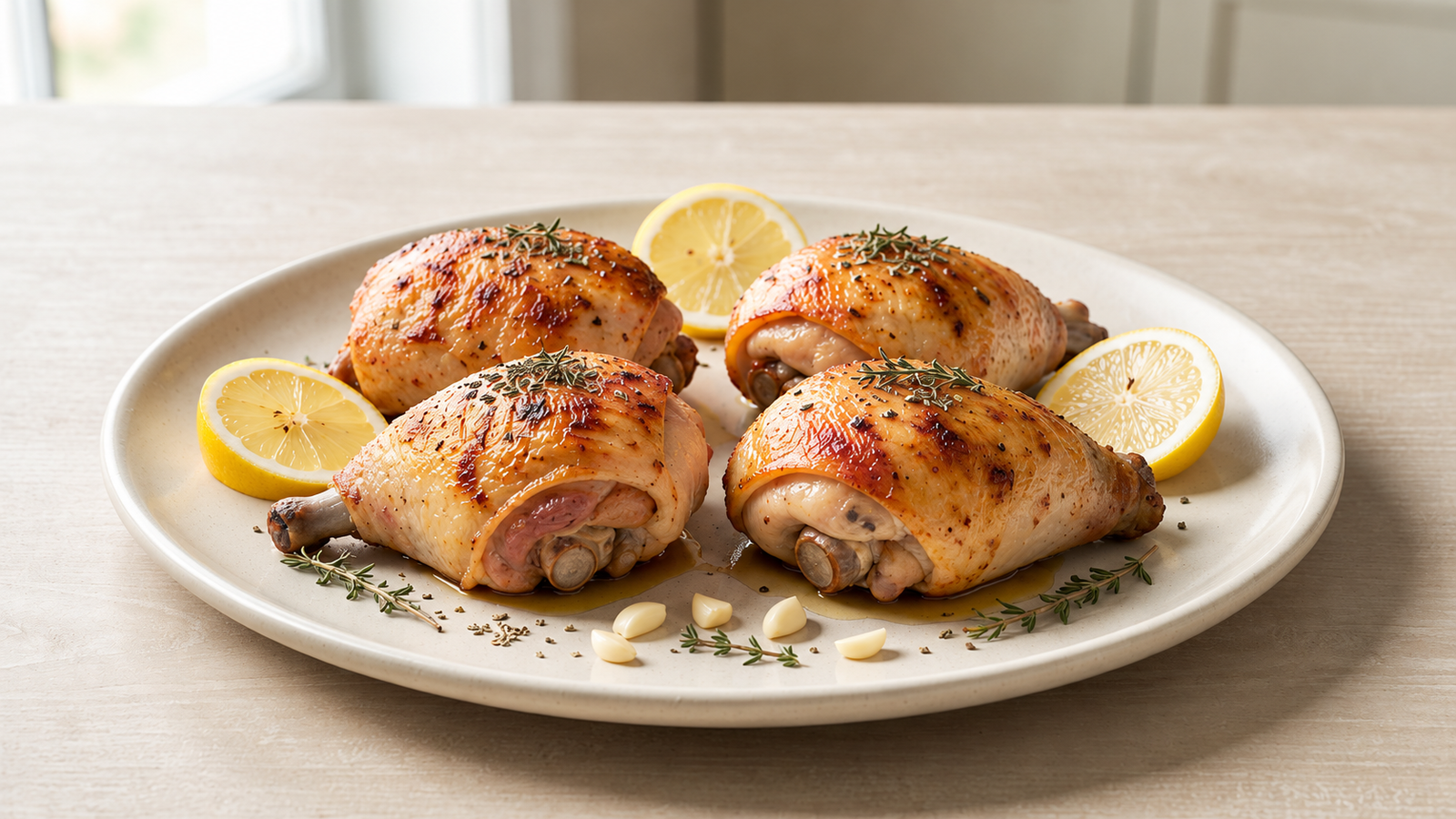
Baked Lemon Herb Chicken Thighs
Ingredients
Method
- Heat the oven to 425°F (220°C). Line a rimmed sheet pan with parchment or foil if desired.
- Pat the thighs thoroughly dry with paper towels and place them skin-side up with space between each piece.
- Zest the lemon, halve it, and combine the zest, olive oil, garlic, oregano, thyme, salt, and pepper. Keep the juice from one lemon half separate.
- Rub the oil and herb mixture over the tops and sides of the thighs. Slice the remaining lemon half and arrange the slices around the chicken, not on the skin. Pour the reserved lemon juice into the pan around the chicken, keeping the skin as dry as possible.
- Roast for about 35 minutes. Check the thickest part of each thigh without touching bone. Continue roasting as needed until every piece reaches at least 165°F (74°C) and the skin is golden.
- Rest the chicken for 5 minutes.
- Spoon a little pan juice around the chicken and serve with fresh lemon wedges if desired.
Notes
Estimated nutrition per serving
| Nutrient | Per serving |
|---|---|
| Energy | 417 kcal |
| Protein | 26.3 g |
| Fat | 33.0 g |
| Saturated fat | 8.1 g |
| Carbohydrate (including fiber) | 2.7 g |
| Fiber | 0.4 g |
| Sugar | 0.3 g |
| Sodium | 710 mg |
Estimates are calculated from the ingredient amounts and standard food composition references, divided into the stated number of equal servings. They are not laboratory measurements. Brands, substitutions, optional additions and portion sizes can change the result. Optional toppings, extra side dishes and unspecified added salt are excluded from the base estimate.
Together in the kitchen
Keep the chicken thigh skin dry, add the lemon juice around the chicken, and, after checking the temperature and allowing the 5-minute rest, serve the pan juices around the chicken if you want to preserve crisp skin.
Kitchen Testing Note
In my test, keeping the skin dry and adding the lemon juice around the chicken helped it brown. After the temperature check and 5-minute rest, serving the pan juices around the chicken works best if crisp skin is the goal.
Frequently asked questions
Where should I insert the thermometer?
Insert it into the thickest part of the meat without touching bone. Check each thigh separately.
Why is my chicken cooked but the skin is soft?
Moisture and crowding are common causes. Check whether lemon juice landed on the skin, whether the thighs touched, or whether the skin started wet. For the next batch, preserve the method’s dry surface and spacing instead of extending cooking simply to chase color.
Can I use boneless thighs or chicken breasts?
They need a different roasting assessment. Removing the bone or changing to breast meat alters the size, thickness, and way the meat cooks, so the same approximate roasting time is not a direct fit. This method is written around skin-on, bone-in thighs.
Can garlic powder replace the fresh garlic in the herb rub?
Yes. The substitution table specifies 1 teaspoon garlic powder instead of the fresh garlic. Mix it into the olive oil and dried herbs so it is distributed across the chicken rather than left in dry patches.
Should I squeeze all the roasted lemon slices over the chicken?
Treat them as an optional accent rather than squeezing every slice over the tray. Roasting concentrates their flavour, and the pan juices already contain lemon. Taste those juices first and add the softened slices according to the balance you prefer.
Leave a Reply