Thin chicken strips, broccoli, red pepper and carrot meet a soy, ginger and honey sauce in a hot wok. Toss the chicken with soy sauce and cornstarch first, then whisk the finishing sauce separately. Cutting and measuring everything before heating the pan keeps this short cooking sequence manageable.
AI illustration: The recipe image was created with AI. The finished dish may look different.
For another weeknight meal with chicken as an easy substitution, see this one-pot chili mac and cheese.
Why you will like this recipe
- Cook in stages: sear the chicken first, then stir-fry the vegetables before bringing everything together.
- Two small cornstarch additions serve different jobs: coating the chicken and thickening the finishing sauce.
- Check thick chicken pieces for 165°F (74°C), then transfer them to a clean plate while the vegetables cook.
- Rice, sesame seeds and green onions are optional additions; the base nutrition estimate excludes them.
Equipment
Equipment: A large wok or 12-inch skillet, cutting board, knife, two mixing bowls, and an instant-read thermometer.
Ingredient choices and cooking cues
The two starch additions do different jobs in this stir-fry. The small amount on the sliced chicken forms a light coating, while the starch in the sauce gives the finished dish its gloss. Neither should look like a heavy batter. Separate the marinated slices before they reach the pan so they can make contact with the hot surface instead of cooking as one clump.
Vegetable size matters as much as the cooking window. Thin carrot pieces can become pleasantly crisp-tender alongside the broccoli and pepper; thick carrot chunks would remain noticeably harder. Broccoli florets with reasonably similar sizes also cook more evenly than a mixture of tiny tips and large, dense pieces. Expect vegetables that retain some bite, which contrasts with the tender chicken and sticky sauce.
Starch settles in the sauce bowl while the chicken and vegetables cook, so the final rewhisk is essential. Scrape across the bottom of the bowl until the mixture looks even before pouring it in. In the pan, the sauce should change from watery to glossy and cling in a thin layer. Honey provides sweetness and helps the coating catch the light, while rice vinegar keeps the soy-and-honey combination from tasting flat.
Substitutions
| Ingredient | Substitute | What changes |
|---|---|---|
| Chicken thighs | Chicken breast | Slice thinly, check early, and cook to 165°F (74°C); it dries more easily. |
| Broccoli | Snow peas or green beans | Use the same weight; green beans may need an extra minute. |
| Soy sauce | Tamari | Use the same amount; check the label if gluten-free preparation matters. |
| Cornstarch | Arrowroot starch | Use the same amount and avoid prolonged boiling. |
Practical tips
- Cut the vegetables first. Then cut the chicken on a separate cutting board, or thoroughly wash and sanitize the board and knife before using them for vegetables or other ready-to-eat ingredients.
- Use a large pan so ingredients sear instead of steam.
- Whisk the sauce again immediately before adding it.
- Use a clean plate for cooked chicken.
Storage and reheating
Cool the stir-fry promptly and refrigerate in an airtight container for up to 3 days. Reheat until the chicken reaches 165°F (74°C). If serving rice, cool it quickly, ideally within 1 hour, refrigerate separately and use within 24 hours. Reheat rice only once, until steaming hot throughout. Freezing is not recommended because the vegetables lose crispness.
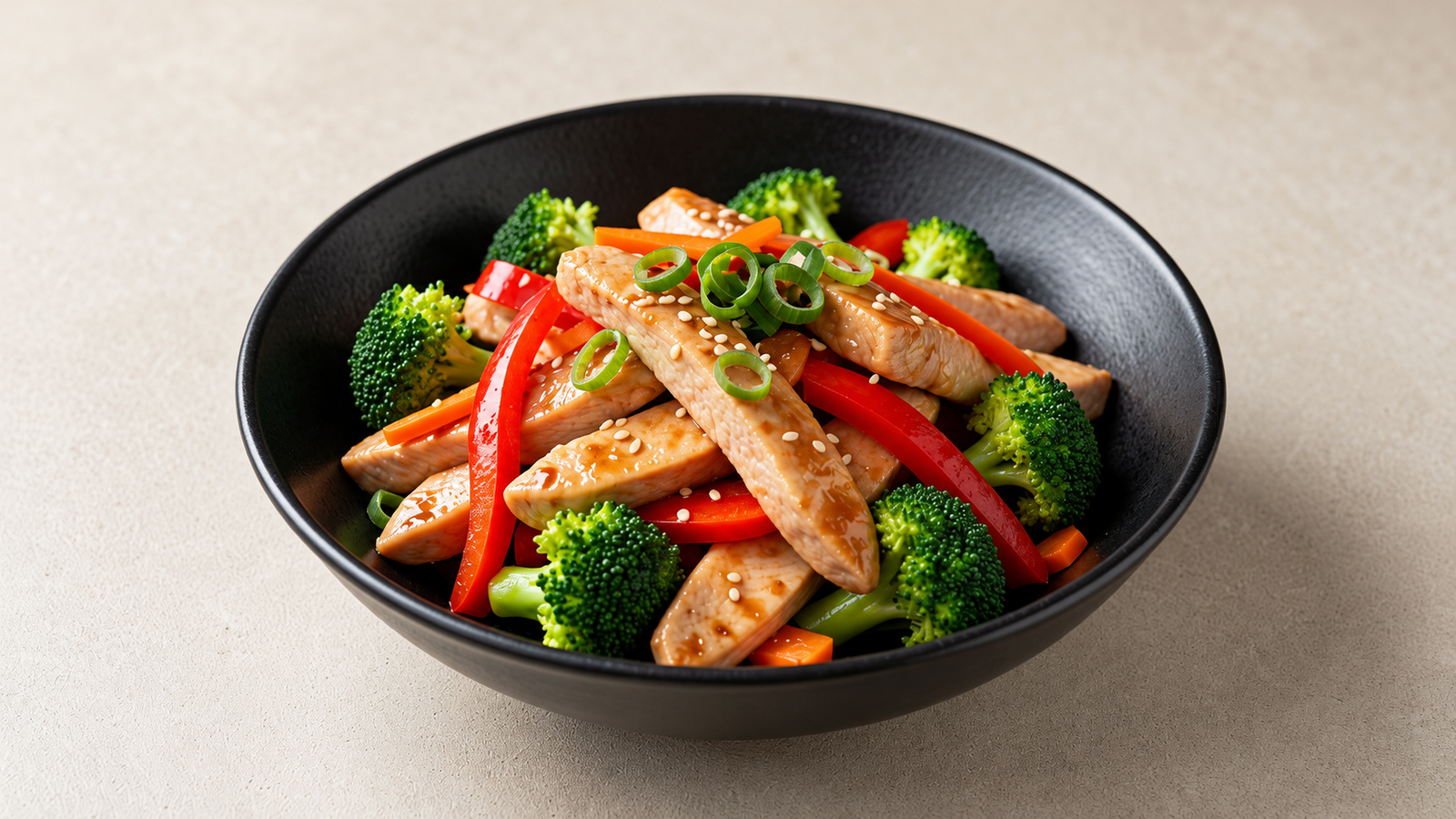
25-Minute Chicken and Vegetable Stir-Fry
Ingredients
Method
- Toss the sliced chicken with 3 tablespoons (45 ml) soy sauce and 1 tablespoon (8 g) cornstarch. Let it stand for 5 minutes while you finish the vegetables and sauce.
- Whisk 2 tablespoons (30 ml) soy sauce, honey, rice vinegar, 1 teaspoon cornstarch, and water until smooth.
- Heat a large wok or skillet over high heat. Add the vegetable oil and swirl to coat.
- Spread the chicken in one layer. Leave it undisturbed for 1 minute, then stir-fry for 3–4 minutes. Check several thick pieces and continue until the chicken reaches at least 165°F (74°C). Transfer to a clean plate.
- Add the broccoli, bell pepper, and carrot. Stir-fry for 2–3 minutes. Add the garlic, ginger, sesame oil, and optional crushed red pepper; cook for 30 seconds.
- Return the chicken and juices to the pan. Whisk the sauce again, pour it in, and toss for 1–2 minutes until it lightly coats everything.
- Serve immediately with rice if desired, plus sesame seeds and green onions if using.
Notes
Estimated nutrition per serving
| Nutrient | Per serving |
|---|---|
| Energy | 307 kcal |
| Protein | 26.0 g |
| Fat | 15.5 g |
| Saturated fat | 2.3 g |
| Carbohydrate (including fiber) | 16.9 g |
| Fiber | 3.1 g |
| Sugar | 7.9 g |
| Sodium | 782 mg |
Estimates are calculated from the ingredient amounts and standard food composition references, divided into the stated number of equal servings. They are not laboratory measurements. Brands, substitutions, optional additions and portion sizes can change the result. Optional toppings, extra side dishes and unspecified added salt are excluded from the base estimate.
Together in the kitchen
Cut the ingredients and prepare the sauce in advance, cook the chicken in a hot pan until it reaches 165°F (74°C), and transfer it to a clean plate before adding the vegetables.
Kitchen Testing Note
In my test, cutting everything and preparing the sauce in advance helped. The chicken was then cooked in a hot pan until it reached 165°F (74°C) and transferred to a clean plate.
Frequently asked questions
Can I use frozen broccoli?
Frozen broccoli introduces more surface moisture and has a softer texture than fresh florets. It may cool the pan and dilute the sauce, so it is not an identical swap within the short vegetable cooking stage. Fresh broccoli is the closer match for the crisp-tender result described here.
Why did the sauce stay thin?
The cornstarch may have settled. Whisk immediately before adding the sauce and let it bubble briefly.
Can I make it spicy?
Add the optional 1/2 teaspoon crushed red pepper with the garlic and ginger.
Why did the sauce turn lumpy?
The starch may have settled or remained in dry pockets before it entered the hot pan. Rewhisking should lift all sediment from the bowl. Keep the food moving as the sauce thickens so it spreads over the chicken and vegetables rather than setting in one spot.
How should I cut the carrots for the short stir-frying time?
Cut them into thin pieces so they become crisp-tender alongside the broccoli and pepper. Thick carrot chunks stay noticeably harder within the brief vegetable stage. Prepare fairly even broccoli florets for the same reason.
Leave a Reply