Maple syrup and Dijon mustard form a sweet-sharp glaze for a whole side of salmon. Garlic seasons the glaze, while fresh dill and lemon wedges finish the fish after roasting.
AI illustration: The recipe image was created with AI. The finished dish may look different.
Why you will like this recipe
- Maple syrup and Dijon mustard combine sweetness with a sharp mustard flavor.
- A whole salmon side roasts on one lined sheet pan and is divided after cooking.
- Fresh dill and lemon wedges finish the fish without being baked into the glaze.
Substitutions
Honey can replace maple syrup. Parsley may replace dill.
Ingredient choices and cooking cues
Maple syrup supplies sweetness and helps the glaze cling, while Dijon mustard gives it enough sharpness to balance the salmon’s richness. Stir the glaze thoroughly so the oil, mustard and syrup coat the fish evenly. Different mustards bring different salt levels, so use care with the additional seasoning rather than treating the mustard as a neutral ingredient.
Patting the salmon dry helps the glaze stay on the surface instead of sliding into liquid on the tray. A salmon side usually tapers from a thick centre to a thinner tail, so thickness is a better guide to doneness than the overall weight. Begin checking the thickest portion and avoid using a darker patch of glaze as proof that the fish is ready.
The glaze can colour before the centre finishes cooking because maple syrup browns readily. Keep an eye on the surface and use a food thermometer to confirm that the thickest part reaches 145°F (63°C). Add dill and lemon at the finish so their fresh aromas remain distinct from the cooked mustard and maple coating.
Begin checking early at the thinner tail end; fold it underneath if necessary for even thickness.
Storage and reheating
Refrigerate promptly for up to 2 days. Reheat gently until hot, or serve chilled.
Recipe card
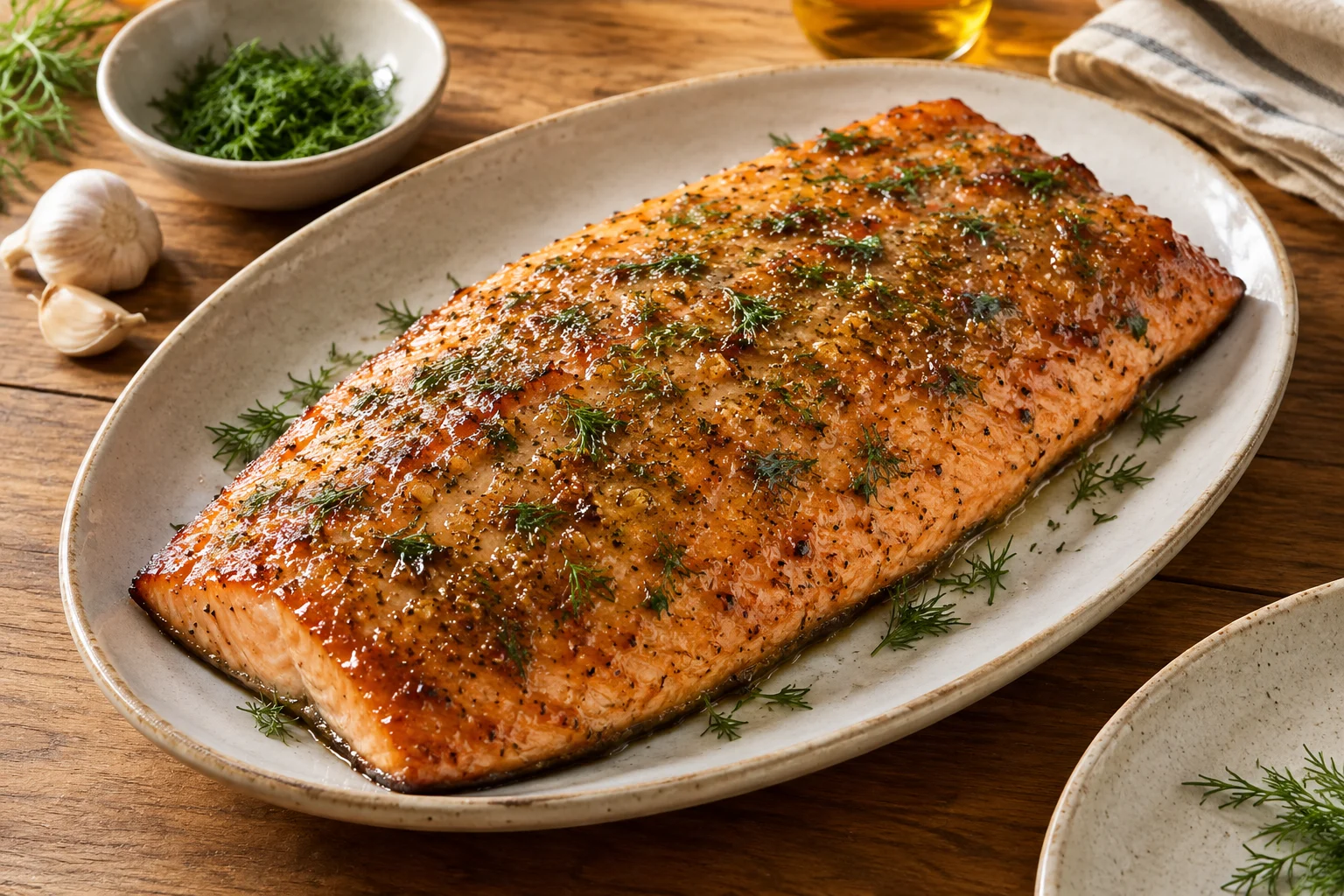
Maple Dijon Glazed Salmon
Ingredients
Method
- Heat the oven to 400°F (205°C). Line a rimmed sheet pan with parchment.
- Pat salmon dry and place it skin-side down. Mix maple syrup, mustard, oil, garlic, salt, and pepper, then brush over the fish.
- Roast for 14 to 18 minutes, depending on thickness, until the center reaches 145°F (63°C) and the fish flakes easily and is no longer translucent.
- Rest for 3 minutes, sprinkle with dill, and serve with lemon wedges.
Notes
Estimated nutrition per serving
| Nutrient | Per serving |
|---|---|
| Energy | 360 kcal |
| Protein | 31.1 g |
| Fat | 23.0 g |
| Saturated fat | 4.9 g |
| Carbohydrate (including fiber) | 5.5 g |
| Fiber | 0.1 g |
| Sugar | 4.3 g |
| Sodium | 398 mg |
Estimates are calculated from the ingredient amounts and standard food composition references, divided into the stated number of equal servings. They are not laboratory measurements. Brands, substitutions, optional additions and portion sizes can change the result. Optional toppings, extra side dishes and unspecified added salt are excluded from the base estimate.
Frequently asked questions
Can I use individual fillets?
Yes. Begin checking 5 to 6 oz / 140 to 170 g fillets after 10 minutes.
Can I prepare the glaze ahead?
Yes. Refrigerate it for up to 3 days and brush it onto the salmon before roasting.
What if the tail cooks before the thick centre?
This is common with a whole side. Check the thick section separately rather than judging the entire fish by its thin edge. For future batches, a piece with more even thickness makes the result easier to control.
Does a browned glaze mean the salmon is done?
No. Surface colour reflects the heat reaching the maple glaze, not necessarily the temperature inside the fish. Place the thermometer in the thickest part and keep the probe clear of the tray for a useful reading.
Leave a Reply