One-pot spaghetti with simple tomato sauce is the kind of dinner that works when you are tired, the cupboard is mostly empty, and you still want something genuinely good on the table. The pasta cooks right in the sauce, so every strand absorbs the tomato flavor as it softens — and you only have one pot to wash afterward.
AI illustration: The recipe image was created with AI. The finished dish may look different.
Dried spaghetti, canned crushed tomatoes, onion, garlic and dried herbs form the base of this one-pot meal. Allow about 25 minutes for four servings; stir as the pasta softens so the strands cook evenly in the tomato sauce.
Why you will like this one-pot spaghetti
- Pasta cooked in its sauce. The spaghetti simmers directly in crushed tomatoes and water, so there is no separate pot of boiling pasta to drain.
- An onion-and-garlic base. Soften the onion first, then briefly cook the garlic before adding tomatoes, oregano and basil.
- Adjustable sauce consistency. Stir during cooking and add water a little at a time if the sauce thickens before the pasta is tender.
Preparation and equipment
Prep time: 5 minutes | Cook time: 20 minutes | Total time: 25 minutes | Servings: 4 | Difficulty: Easy
Equipment: One large pot or deep skillet (12 inches / 30 cm minimum), wooden spoon, measuring cups and spoons.
Process illustration
Ingredient choices and cooking cues
In this one-pot spaghetti, the pasta starch becomes part of the tomato sauce instead of being poured away with cooking water. That gives the sauce body, but it also makes stirring important: strands touching the bottom can stick before the spaghetti above them has softened. Use a pot wide enough to move the broken strands around, and separate any bundles as you stir. A glossy sauce clinging to individual strands is a better finishing cue than a completely dry pan.
Crushed tomatoes vary in thickness, so the starting liquid does not always behave identically. Judge the pasta and the sauce together. Firm spaghetti in a thick, almost immobile sauce needs the small water additions described in the method; tender spaghetti in loose sauce needs the uncovered finish. A little visible liquid while the pasta is still cooking is useful. The sauce continues to tighten as the starch hydrates and the finished spaghetti stands.
The brief garlic cooking stage should smell fragrant without turning dark brown. Its flavor carries through the whole pot, whereas burned garlic can make the tomato sauce bitter. Optional Parmesan adds salt as well as richness, so taste the finished sauce before deciding whether it needs more seasoning.

One-Pot Spaghetti with Simple Tomato Sauce
Ingredients
Equipment
Method
- In a large pot or deep skillet, heat the olive oil over medium heat for about 30 seconds.
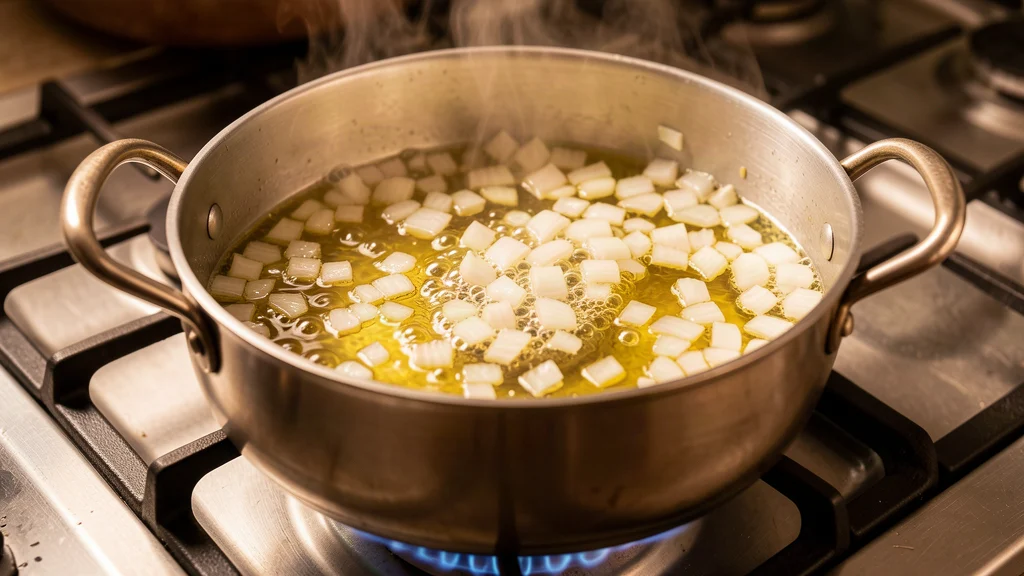
- Add the diced onion and cook, stirring occasionally, until softened and translucent, about 5 minutes. Adjust the heat if the onion starts to brown too quickly.
- Add the minced garlic and stir for 30 seconds, until fragrant. Do not let the garlic burn.
- Pour in the crushed tomatoes and water. Add the oregano, dried basil, salt, pepper, and sugar, then stir well.
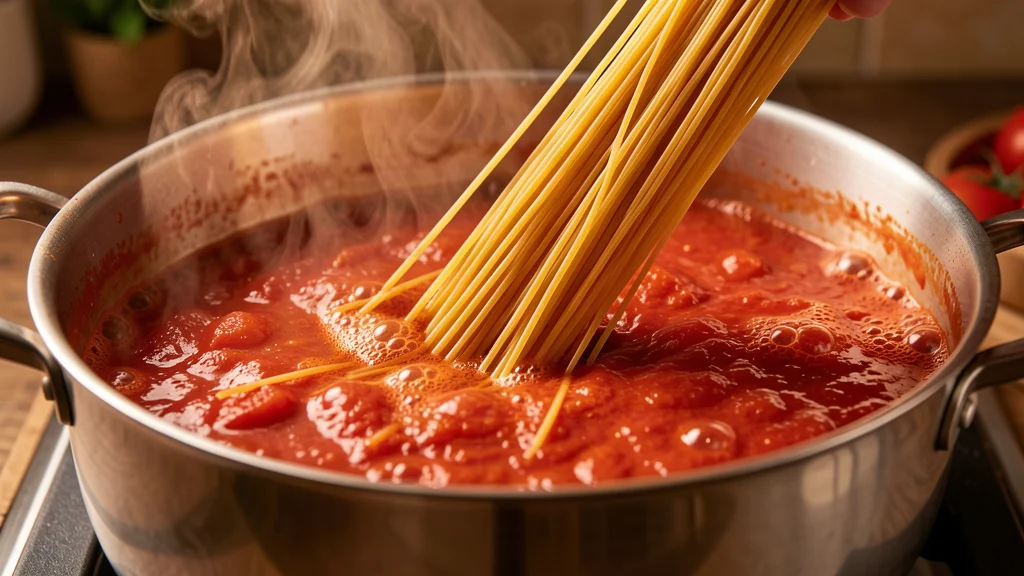
- Break the spaghetti strands in half so they fit comfortably in the pot, then add them to the sauce.

- Bring the mixture to a boil over medium-high heat, stirring frequently. Reduce the heat to medium-low, partially cover, and simmer for 12–15 minutes, stirring every 2–3 minutes, until the spaghetti is al dente and the sauce has thickened.
- Taste and adjust the seasoning. If the sauce is too thick, add water 1/4 cup (60 ml) at a time. If it is too thin, simmer uncovered for another 2–3 minutes.
- Divide among bowls and top with grated Parmesan if using. Serve immediately.
Notes
Estimated nutrition per serving
| Nutrient | Per serving |
|---|---|
| Energy | 563 kcal |
| Protein | 18.6 g |
| Fat | 9.1 g |
| Saturated fat | 1.4 g |
| Carbohydrate (including fiber) | 103.8 g |
| Fiber | 8.3 g |
| Sugar | 14.0 g |
| Sodium | 962 mg |
Estimates are calculated from the ingredient amounts and standard food composition references, divided into the stated number of equal servings. They are not laboratory measurements. Brands, substitutions, optional additions and portion sizes can change the result. Optional toppings, extra side dishes and unspecified added salt are excluded from the base estimate.
Safe substitutions
| Ingredient | Substitute | Notes |
|---|---|---|
| Spaghetti | Gluten-free spaghetti, linguine, or fettuccine | Check pasta package for cook time — GF pasta may need 1-2 minutes less |
| Crushed tomatoes | 1 can (28 oz / 800 g) whole peeled tomatoes, blended smooth | Same quantity; texture will be slightly smoother |
| Dried basil | 1/4 cup fresh basil, torn (add as garnish after cooking) | Fresh basil loses its flavor if cooked for 15+ minutes; add raw at the end |
| Parmesan | Nutritional yeast (2 tbsp / 15 g) | For a dairy-free option; flavor is different but pleasant |
| Olive oil | Vegetable oil or canola oil | Neutral flavor; works fine |
Storage and reheating
- Refrigerate: Store leftovers in an airtight container for up to 4 days. Reheat in a pot over low heat with a splash of water (1/4 cup / 60 ml) to loosen the sauce. Microwaving works too — cover loosely and heat in 60-second bursts, stirring between.
- Freeze: Freeze in a sealed container for up to 2 months. Thaw overnight in the refrigerator before reheating. The pasta texture may be slightly softer after freezing.
Together in the kitchen
Break the spaghetti in half as directed in the base recipe, then move and separate the strands soon after adding them so they cook without sticking together.
Kitchen Testing Note
In my test, moving and separating the spaghetti soon after adding it helped prevent sticking, while the released starch helped give the tomato sauce more body and helped it cling to the pasta.
Frequently asked questions
Can I use fresh tomatoes instead of canned?
Yes. Use about 2 lbs (900 g) of ripe fresh tomatoes, peeled and roughly chopped, instead of the 28 oz (800 g) can of crushed tomatoes. Simmer the sauce a few minutes longer to let the excess water evaporate. Fresh tomatoes will produce a lighter, brighter sauce than canned.
Do I have to break the spaghetti in half?
Breaking the spaghetti in half makes it easier to stir in a single pot, especially if your pot is wide rather than tall. If you prefer full-length spaghetti and have a deep pot, you can skip this step — but you may need to press the pasta down gently with tongs as it softens to submerge it in the sauce.
The sauce is too thick or too thin — what do I do?
If the sauce is too thick, add 1/4 cup (60 ml) of water at a time and stir. If it is too thin, simmer uncovered for another 2-3 minutes to let the excess liquid evaporate. The final consistency should coat the pasta strands without being watery.
Can I make this ahead of time?
Yes. This recipe reheats well and keeps for up to 4 days in the refrigerator. The pasta will absorb more sauce as it sits, so add a splash of water when reheating to bring it back to the right consistency.
Can I use whole-wheat or gluten-free spaghetti?
Neither is an exact swap for the same one-pot timing. Whole-wheat pasta may need more hydration, while gluten-free strands can release starch differently and become fragile. Use the packet as a reference and judge tenderness rather than assuming the stated cooking window will fit.
Why is sugar included with the tomatoes?
A small amount can soften the perception of sharp tomatoes. Taste first: naturally sweet crushed tomatoes may not need that adjustment. Sugar will not repair bitterness from scorched garlic or pasta stuck to the bottom.
For more pasta ideas, try our garlic butter white bean pasta or creamy tomato orzo with spinach.
Leave a Reply