Butterflied pork tenderloins are rolled around a filling of softened apple, shallot, breadcrumbs and sage. Browning the tied rolls before roasting adds color to the outside, while a short rest makes them easier to slice.
AI illustration: The recipe image was created with AI. The finished dish may look different.
Why you will like this recipe
- Apple and shallot soften before breadcrumbs, sage and broth form the filling.
- Pounding the butterflied pork to an even thickness helps the filling roll inside neatly.
- Tying and browning the rolls before roasting gives the outside color and helps hold the shape.
Substitutions
Pear may replace apple. Gluten-free breadcrumbs work in the same quantity.
Ingredient choices and cooking cues
Finely diced apple and shallot soften into a filling that can spread evenly across the pork. Large apple pieces create bulky pockets and make the roll harder to close. Breadcrumbs absorb the broth and some apple moisture, helping the filling hold together. Aim for a moist, cohesive mixture rather than a loose, wet stuffing, and let it cool before spreading it over the meat.
Butterflying and flattening the tenderloins gives each roll a more even thickness. That helps the pork cook consistently and makes it easier to distribute the apple and sage without piling the filling in one spot. Leave the edges clear enough to close, then tie the rolls so they retain their shape while browning and roasting. Sage is assertive, so distribute it thoroughly through the filling.
Browning develops flavour on the outside, while the broth in the skillet keeps the pan juices from becoming a dry coating. The centre of a stuffed roll needs its own temperature check: place the thermometer into the middle of the stuffing and confirm 165°F (74°C). Surface colour cannot show whether the filling has reached that point. Allow the stated rest before removing the ties and slicing.
Keep raw-pork utensils separate, sanitize the work surface, and verify temperature in the center of the rolled meat.
Storage and reheating
Refrigerate within 2 hours for up to 4 days. Reheat leftovers to 165°F (74°C).
Recipe card
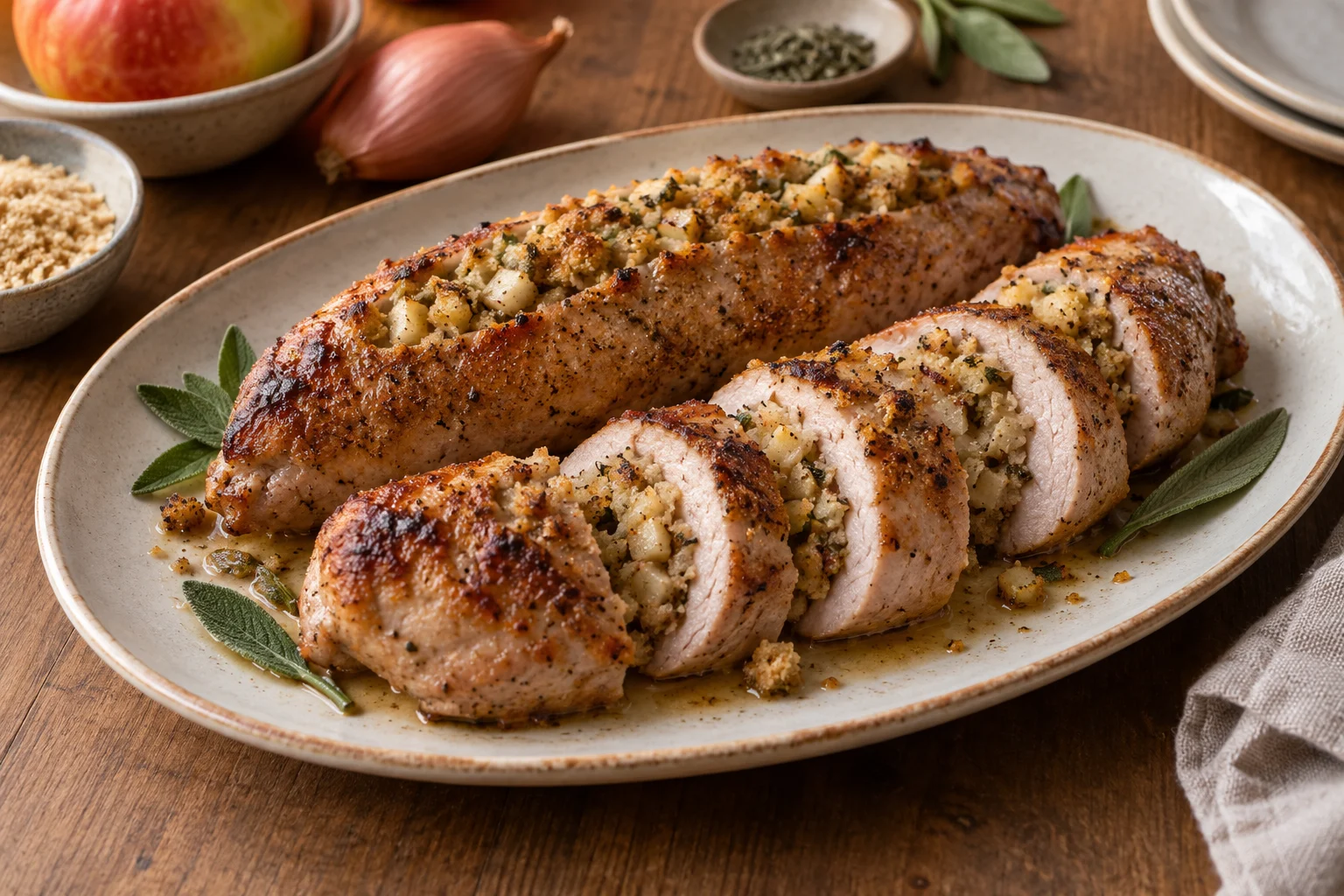
Apple Sage Stuffed Pork Tenderloin
Ingredients
Method
- Heat the oven to 400°F (205°C). Cook apple and shallot in half the oil for 4 minutes. Stir in breadcrumbs, sage, and 1/4 cup (60 ml) broth, then cool.
- Butterfly each tenderloin lengthwise without cutting through. Cover and pound to an even 1/2-inch thickness. Season with salt and pepper.
- Spread filling over the pork, roll tightly, and tie with kitchen twine. Brown in the remaining oil in an oven-safe skillet.
- Add remaining broth and roast for 18 to 24 minutes, until the center reaches 165°F (74°C). Rest for at least 3 minutes before slicing.
Notes
Estimated nutrition per serving
| Nutrient | Per serving |
|---|---|
| Energy | 258 kcal |
| Protein | 32.9 g |
| Fat | 8.2 g |
| Saturated fat | 2.2 g |
| Carbohydrate (including fiber) | 11.5 g |
| Fiber | 1.3 g |
| Sugar | 3.7 g |
| Sodium | 346 mg |
Estimates are calculated from the ingredient amounts and standard food composition references, divided into the stated number of equal servings. They are not laboratory measurements. Brands, substitutions, optional additions and portion sizes can change the result. Optional toppings, extra side dishes and unspecified added salt are excluded from the base estimate.
Frequently asked questions
Can I stuff it ahead?
Yes. Refrigerate the rolled pork for up to 12 hours and roast directly from chilled, allowing extra time.
Why must it rest?
A minimum 3-minute rest completes the safe-temperature guidance and helps retain juices.
Why does the filling fall out when I slice the pork?
Overfilling, an uneven roll or slicing immediately can all make the pieces less stable. Spread the filling evenly, tie securely and let the cooked rolls rest. Use a sharp knife and cut carefully through each portion.
Where should I check the temperature?
Check the centre of the stuffing inside each tenderloin, rather than only the outer layer of pork. The rolls can differ in thickness, so a satisfactory reading in one does not establish the temperature of the other.
Leave a Reply